Breaking the Rules of No Rules
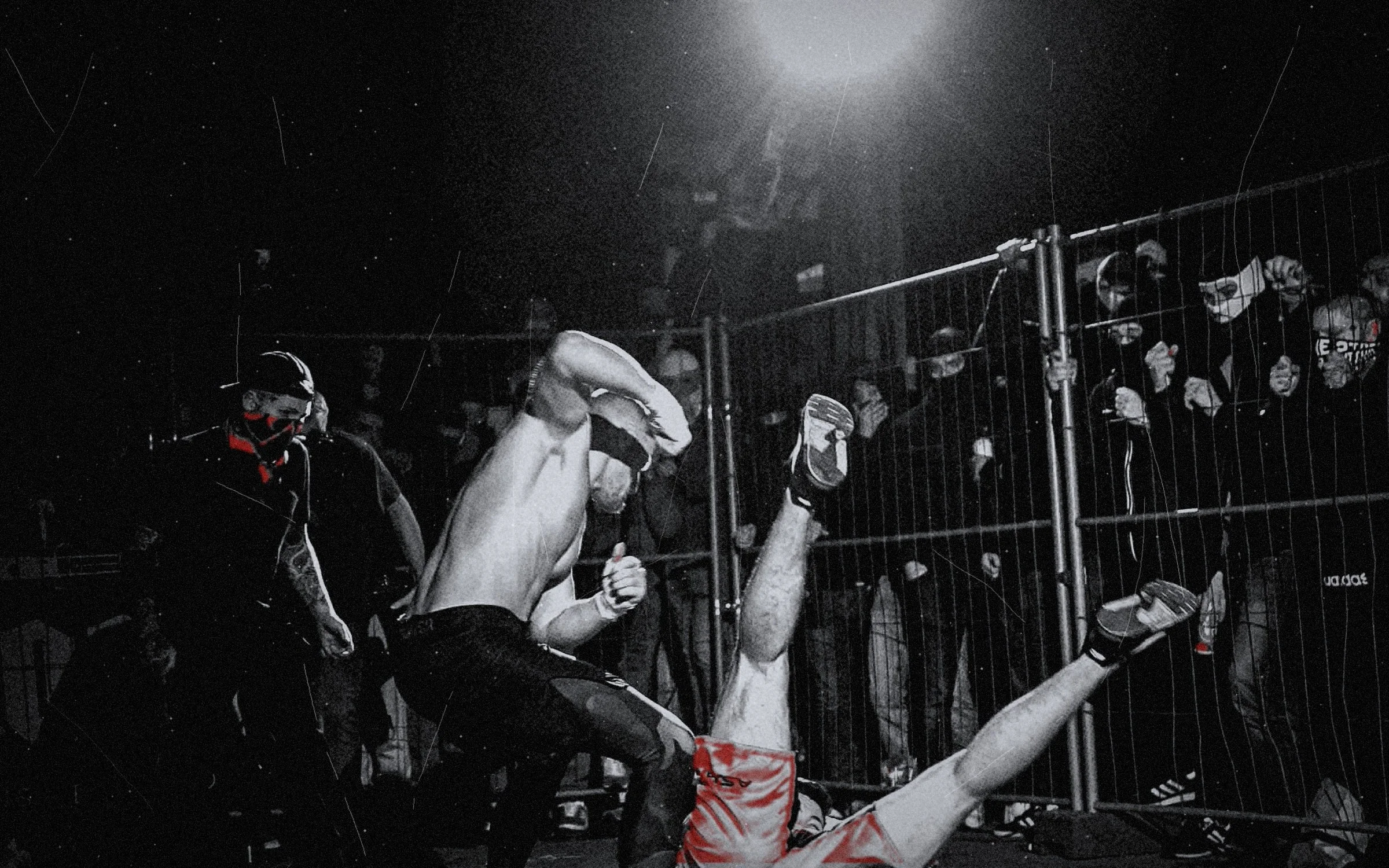
One thing I learned inside the world's most notorious fight club
Breaking the Rules of No Rules
Back in the day, King of the Streets was “just” a no rules fight club. Then one fight showed everyone they had been living by rules all along.
If you are here, you probably know what King of the Streets is. What you might not know is its history.
It has always been called the most brutal fight club in the world, and if you have seen the videos, you know why. A man flat on his back on bare concrete while the other one drives elbows straight down into his face. A fight that goes on a few seconds longer than it should. A head bouncing off a wall. A body lifted and slammed onto cement, and the sound that comes with it. It is the kind of footage you watch with your hand halfway over your eyes, and then watch again.
And still, back in the day, it was “just” a no rules fight club, with a few unwritten rules. Almost nobody went for the eyes. It simply was not done.
The one fight that changed it all.
It has been talked about over and over, replayed across social media, picked apart by YouTubers and influencers who could barely hide their disgust.
Eric Olsen against KNF.
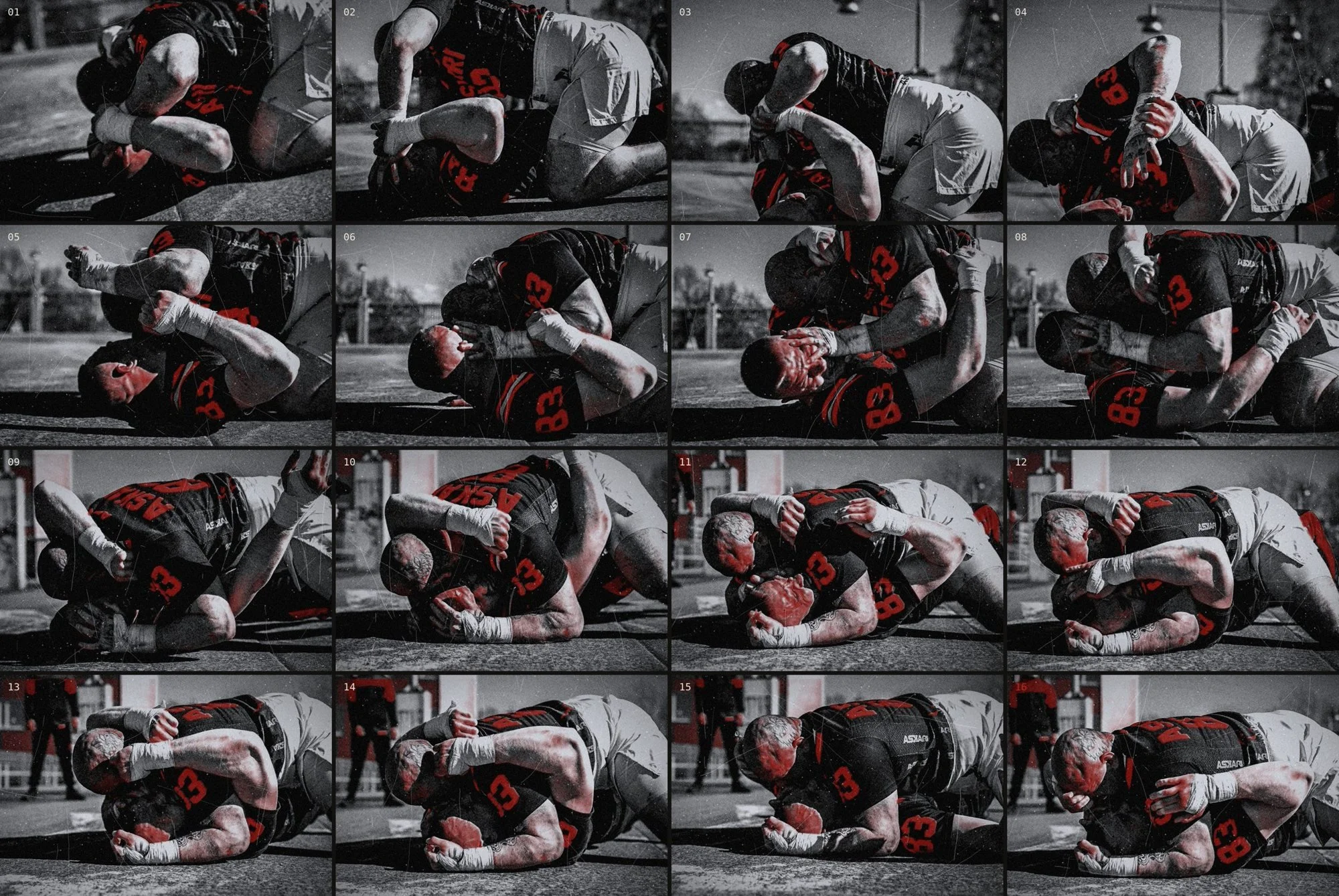
I.Eric and KNF
Eric “Bloodaxe” Olsen is an American professional fighter, a former wrestler with a cold stare, who does not pretend to be anything he is not. KNF is a Polish fighter who walked in behind the mask of his football club. On the ground, Eric pushed his fingers into KNF's eyes and held them there. An eye gouge.
I have watched the footage more times than I would like. What stays with you is not the move itself. It is the sound.
Eric does not apologize for any of it. “King of the Streets always had no rules,” he told me. “But I really brought it to no rules.” When I asked what it felt like, he described something close to relief. “It felt like all the clouds in my head left and parted.”
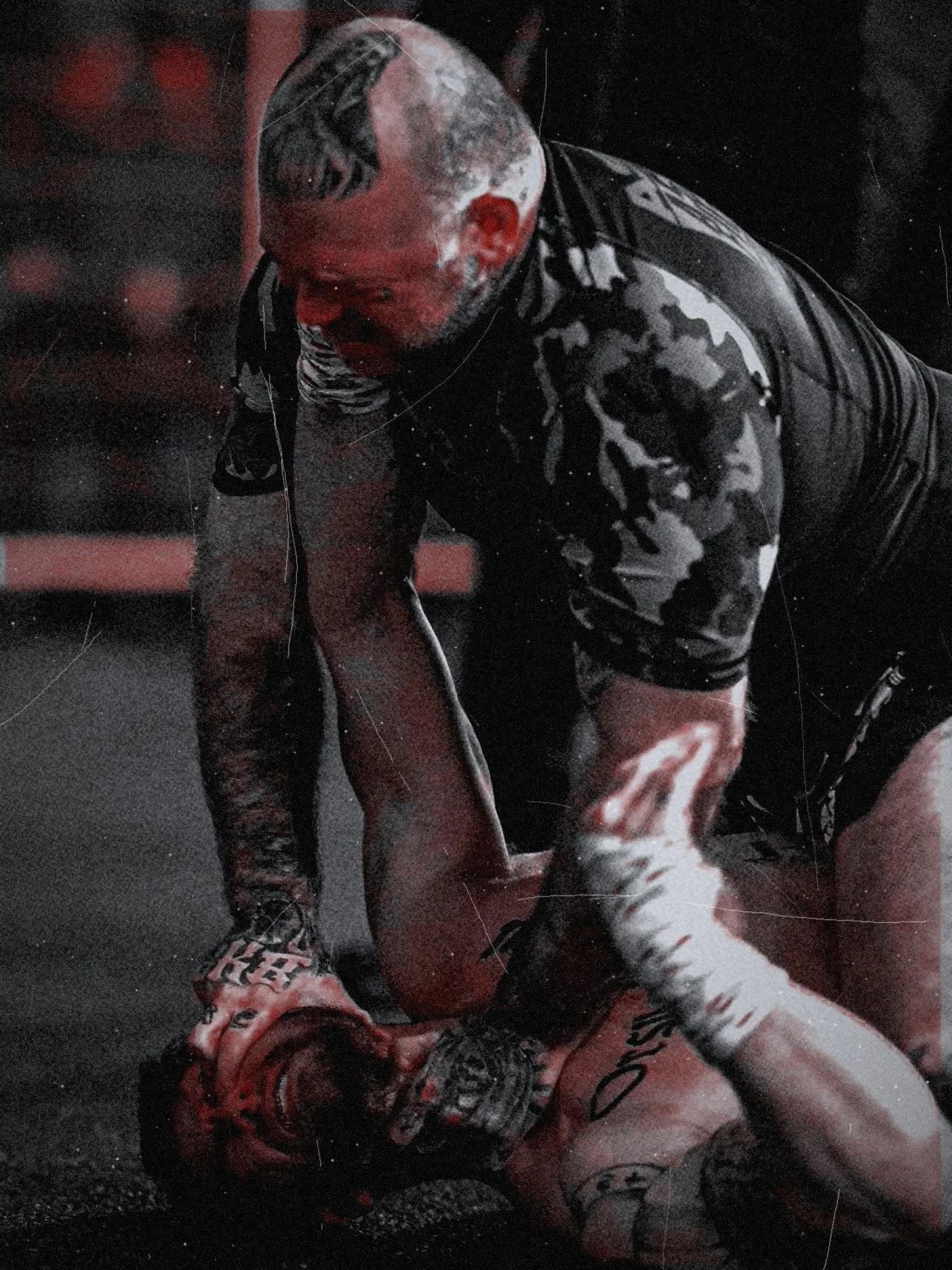
The reaction was immediate, and it split the community in two. Some of the fans who had cheered every knockout, every broken nose, every man carried out on a stretcher, suddenly drew a line. Others shrugged and said what the club had always said: no rules means no rules. The fight worked like a divider. You were on one side of it or the other.
For the first side, the verdict was simple. Disgusting. Immoral. A line you do not cross.
But by what rule? Nothing had been broken. The fight club had kept its promise exactly. The people who were angry had all signed up, as fighters or as viewers, for no rules. They had just discovered, in that moment, what it really meant.
Eric's eye gouge became the four-minute mile of King of the Streets.
After Eric, many more followed.
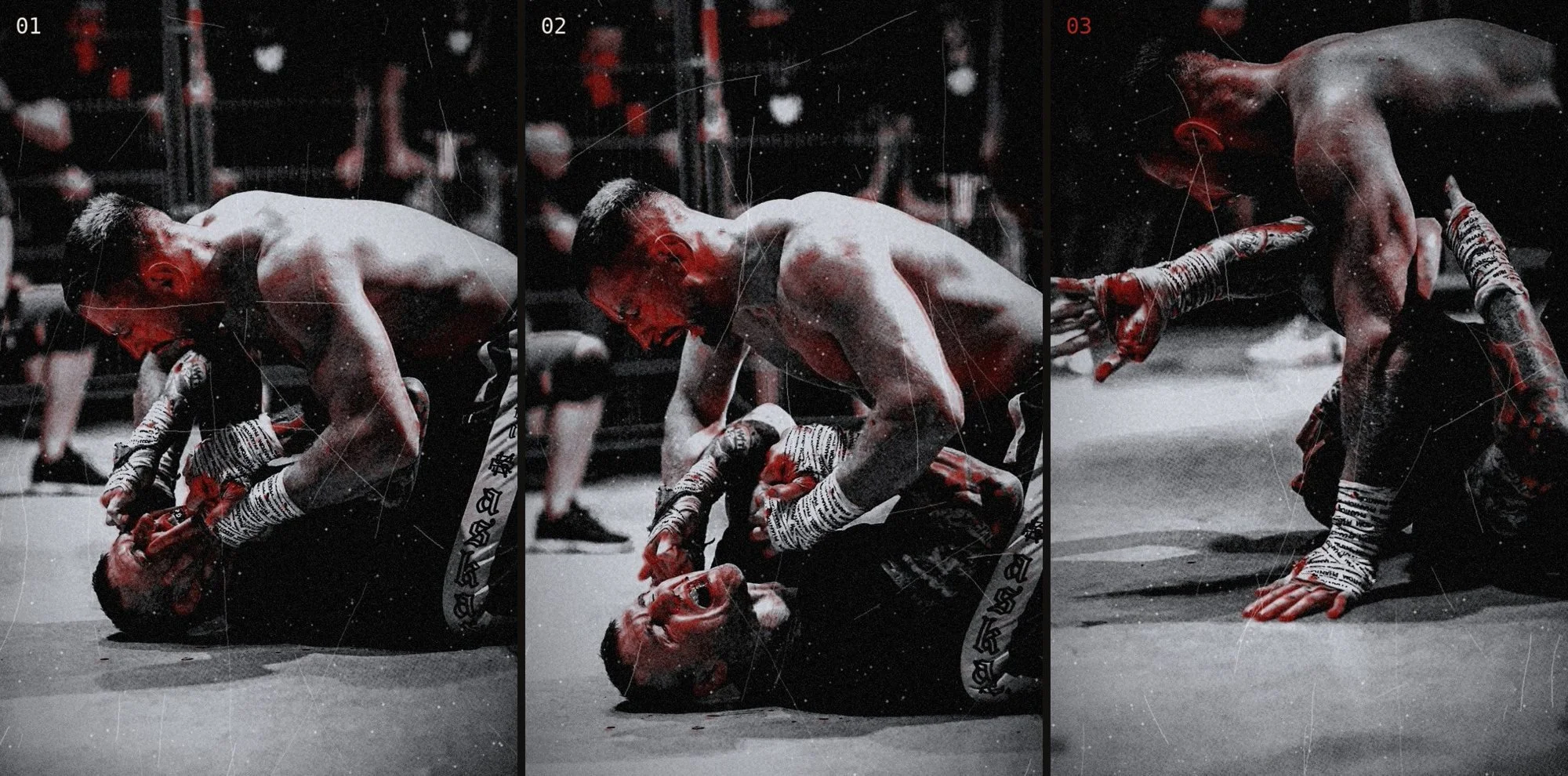
II.Every fighter, his own rulebook
In conversations with fighters, every one of them told me the same thing: there are no rules. And every one of them fully understood what that meant. But each of them had his own buffer against it. Some called it honor. Others called it cowardice.
Eric's comment on the outrage is short. “Honor is for dead people,” he says. In a fight that could end in death, why wouldn't you try to win as fast as possible, and do as much damage as you can?
“When they say no rules, they just mean what they want.”
Eric Olsen
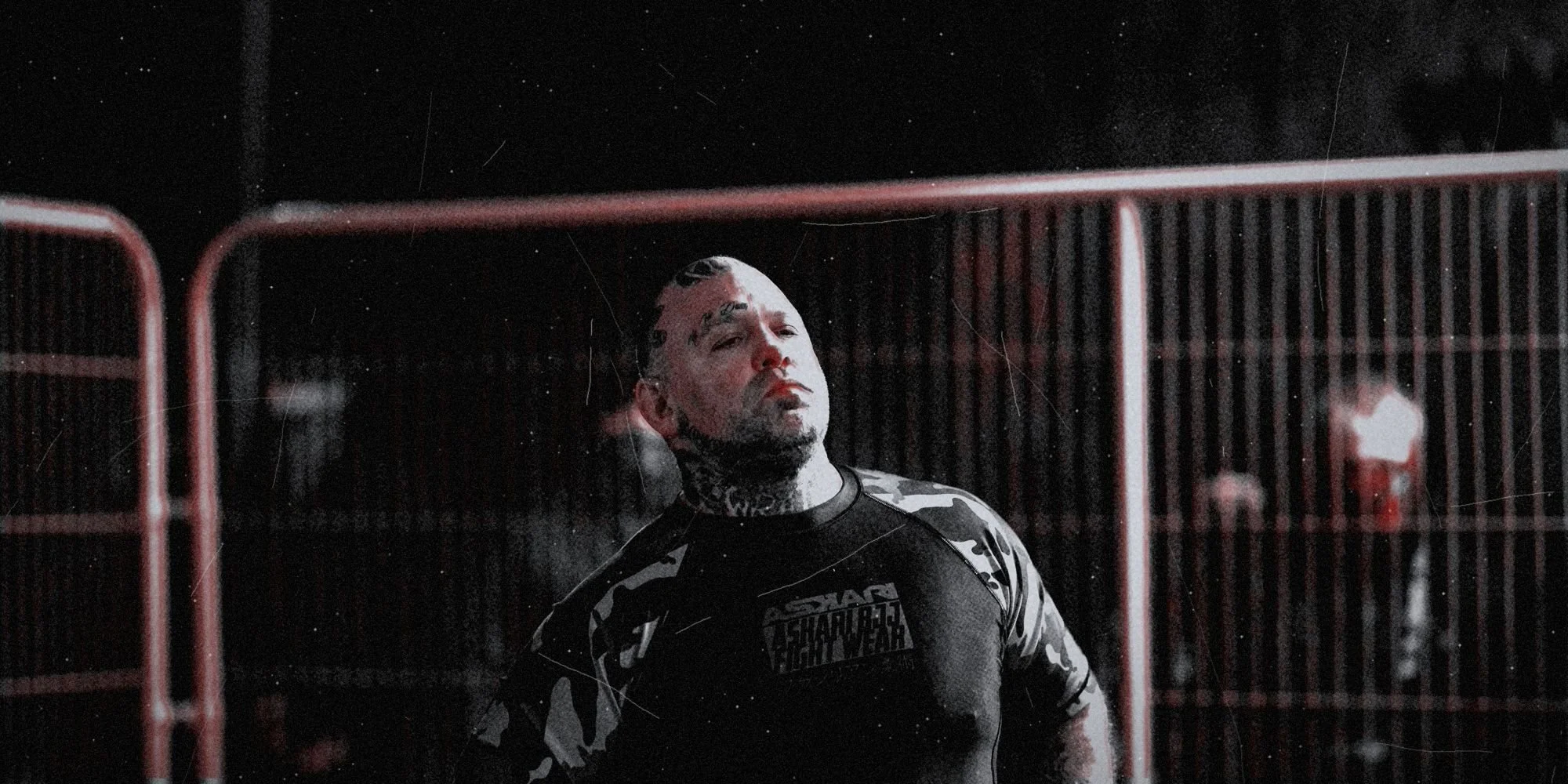
“They still want rules that fit their life and their world,” he told me. “So they say the unwritten rule. What the fuck is an unwritten rule? This is okay, but that's not okay.” You are not allowed to go for the eyes, he points out, but you are allowed to kick a man in the back of the head. Who decided where that line goes?
To him, the unwritten rules are not honor at all. “They claim I have honor. No, you don't. You're scared.”
You do not have to agree with him. I don't, entirely. But he is making a real point. The code was not handed down by nature. People wrote it, and then forgot that they did.
What the eyes change
There is also a practical side to this that rarely makes it into the comment sections. In most fighting sports, the ground is where technique wins: arm locks, chokes, positions that slowly take a man apart.

Once the eyes are in play, the logic of grappling turns upside down. In a sport, lying on your back with your legs wrapped around an opponent (what fighters call the guard), holding a man in a headlock or controlling him from underneath are positions of strength. You are safe there. On concrete with no rules, the same positions put your face within reach of his fingers. Control becomes exposure. The skills that win a jiu-jitsu match can become the fastest way to get hurt, and a fighter who has spent years learning to be comfortable in those positions suddenly has to unlearn that comfort.
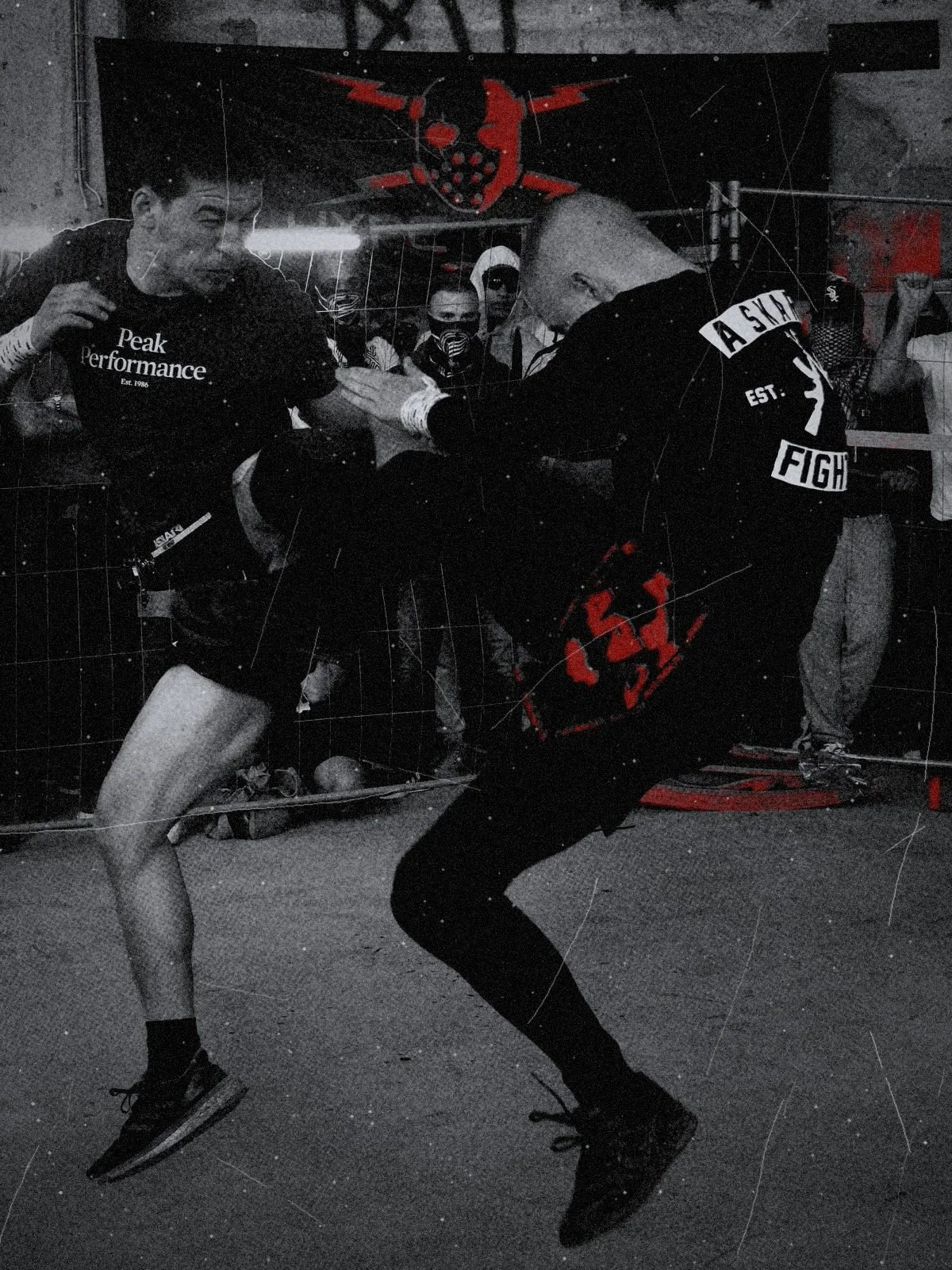
Brian Hooi poked his opponent's eyes in his third King of the Streets fight, and got the same backlash. What struck him was what nobody complained about. “I did knees from 12 to 6,” he says, meaning knees driven straight down into a man on the ground, strikes most combat sports ban as too dangerous. “People weren't saying shit about that, but they complained about the finger and the eye.” His conclusion: “Everybody wants to see extreme until it gets extreme, or too extreme for them.” Or, as he put it another time: “People want to see crazy shit until they see crazy shit.”
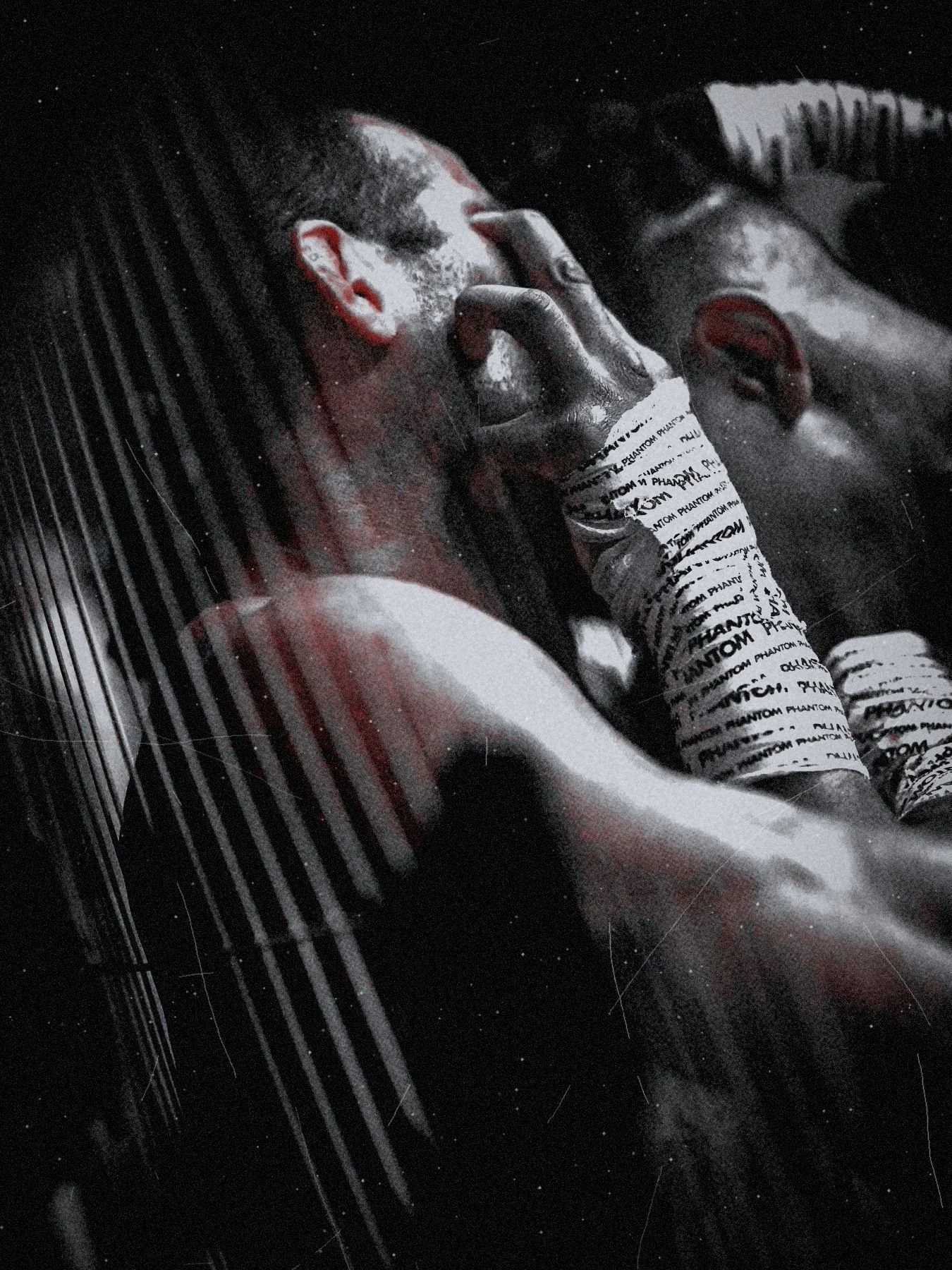
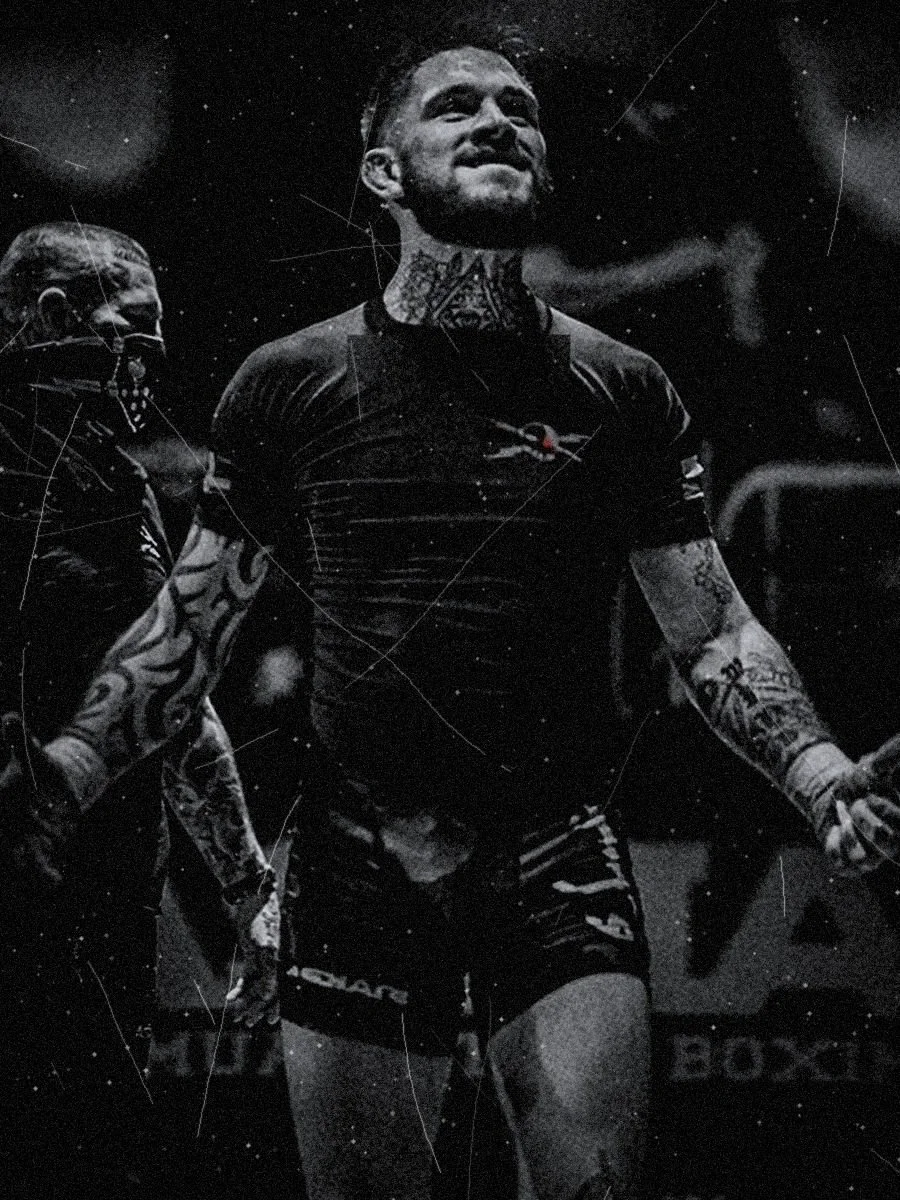
Liam Wilson, an English fighter, draws his line somewhere else. “No rules, of course, means no rules,” he says. Nobody has ever tried to gouge him, and he has never tried it either. Not out of honor, he says, but because he can do more damage other ways. “I can do so much more with no rules to hurt you.” Elbows and headbutts leave a bigger mark, in his view.
But his code has a clause. If he knew an opponent had done it before, he would do it back. “I would pull that eye out,” he says, “probably just to prove a point.”
III.The reality check
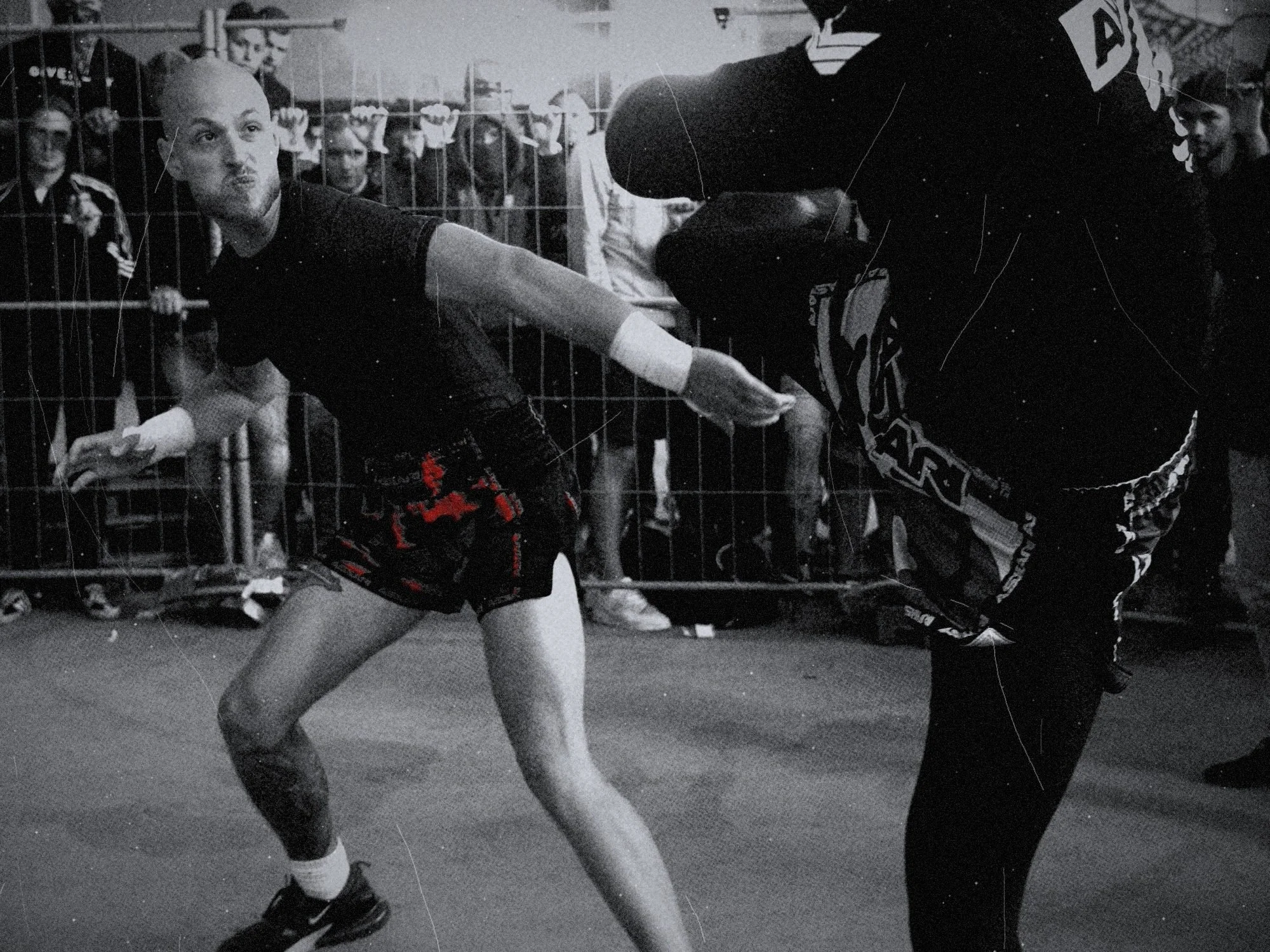
And then there was the fight that cemented King of the Streets. Alex against Bash. It started like any other fight. Two men thrusting and swinging. But mid-fight, something happened, and it wasn't until afterwards that we understood what. Alex's ear, on the ground.
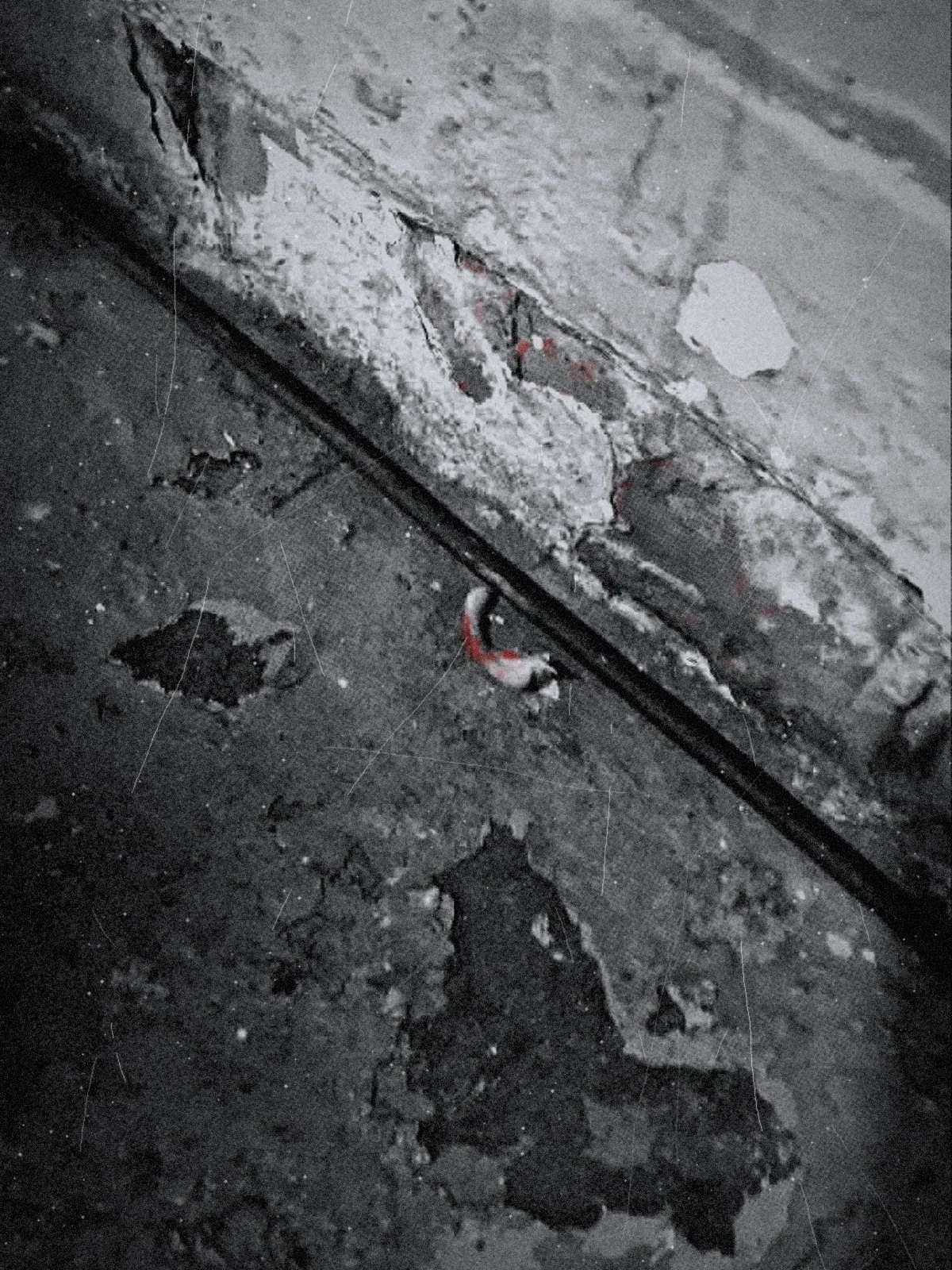
That was the reality check for all of us. Eric's fight changed the rules. This one made them real.
Now, put aside for a second everything you expect a fight to be. Every preference about what no rules should mean, and what kind of fights we want to see. Doesn't this prove Brian's point? Everybody wants to see extreme, until it gets extreme.
As much as I hate the eye gouging, and as much as I hate seeing heads slammed into concrete and ears bitten off, isn't this fighting in its purest form? Bear with me while I elaborate on this for a second.
We were raised to believe a fight should follow certain standards. Gloves, rounds, a referee, a handshake. If you grew up in kickboxing and Thai boxing arenas, or if you see this as a sport, you are looking at it from the wrong angle. Many of these men compete in regular combat sports too. But when they step onto the concrete at King of the Streets, to them, it becomes something bigger.
Maybe I'm biased. Maybe I'm just numb after all these years. But I think that is part of the poetry of it. You don't play King of the Streets. It is not a sport. When you fight here, everything is at stake. For a lot of these men, it is a moment of ascension, and in that moment nothing else matters. Liam said it to me in Gothenburg:
“It’s so real, and nothing else makes you feel like that.”
Liam Wilson
So maybe we should ask ourselves: isn't this exactly what the fighters wanted? Maximum risk, maximum reward. A place to test everything they have, with no parachute.
I don't mind no rules, as long as it is agreed upon and voluntary. That is for the fighters to decide. And I would be lying if I said I am not fascinated by the rawness of it.
Even in a place with no rules, people make their own. Unspoken agreements, like a path worn across a field. And it only takes one man to break them.
But there were always no rules. People just held on to their own idea of what that meant.
Both things can be true at once. No rules might be fighting in its purest form, and still, honor does not go away. Eric says it is for dead people. Maybe. But think about what happens when you are allowed to do anything. Then it is not just about winning anymore. It is about how you win, and what kind of fighter you want to see yourself as. Kind of like in life, where you get to choose the man you want to be. When nothing is forbidden, honor stops being a rule someone hands you and becomes a choice you make yourself.
And when you have all the choice in the world, honor might be the only currency left.
Victor Palm is the director of King of the Streets: The Documentary.
